 RoutrGet Routr
Teach Trips Stick first
Start your young or new team with Trips Stick. Put three receivers to the right and point out Y’s 5-yard stick. Tell your quarterback to watch the flat defender. If that defender widens toward X, throw Y. If the defender stays inside, throw X in the flat.
Give each receiver a clear landmark. Y runs to 5 yards and faces the quarterback. X widens into the flat, reaching 3 yards downfield. C runs to 6 and turns left across the middle. Z runs the outside fade toward 18. Walk the whole group through once so nobody mistakes a nearby route for their own.
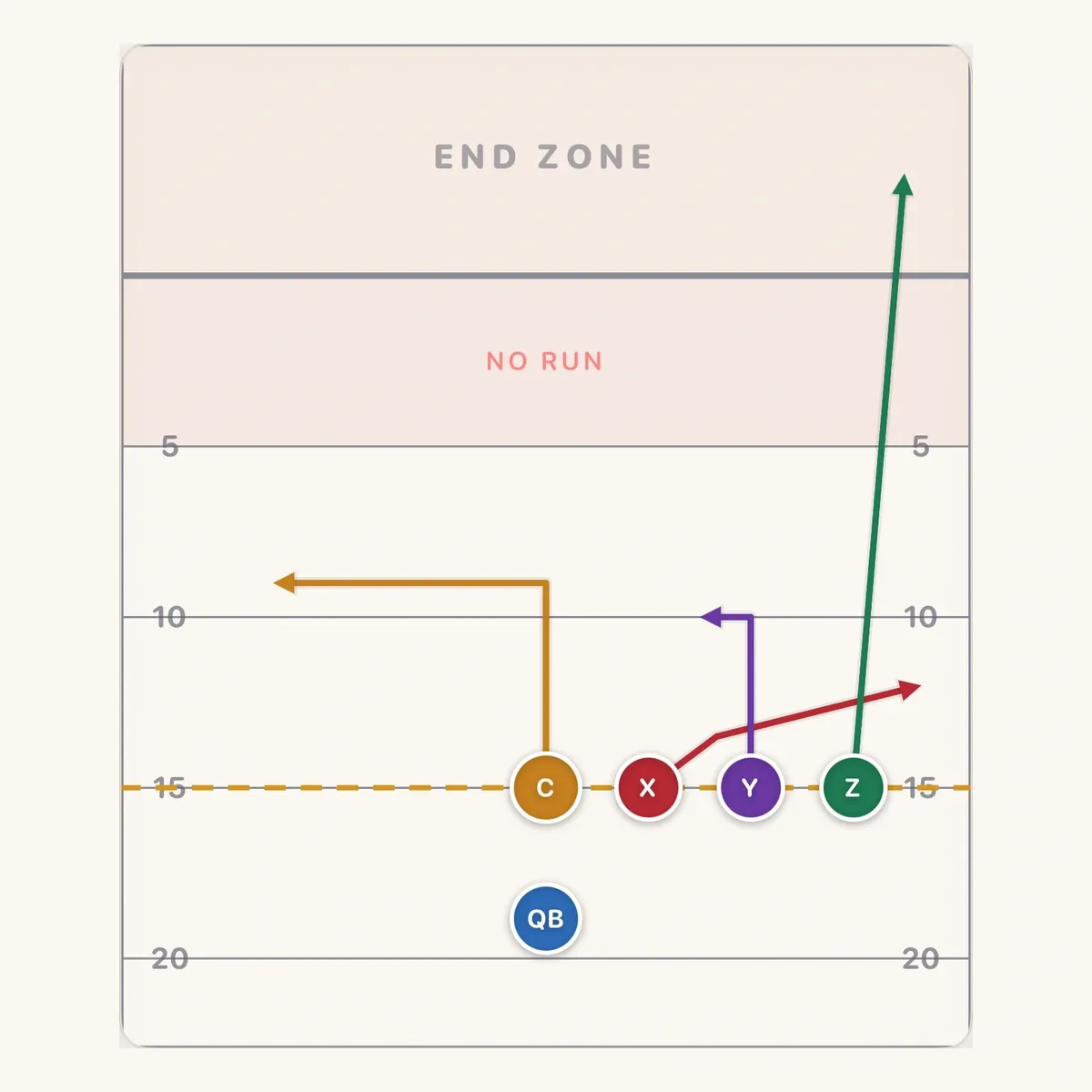
Practise the first read with one defender. Ask that player to move outside on one repetition and stay inside on the next. Your quarterback watches the movement and chooses the open target. Let the receiver catch before adding a second defender or moving the drill faster.
Keep your instructions short between repetitions. Ask the quarterback which space opened. Ask Y where to turn and X which direction to widen. If a player hesitates, walk the route again with the same words instead of adding a new explanation.
Add Mesh Drive for moving targets
Mesh Drive gives you a different first read: find the crosser separating from a defender. X crosses at 4 yards and Z at 6. Teach those tracks separately, then run them together. The receivers keep moving across the field while the quarterback leads the open one into space.
Place cones on both crossing depths. Have X and Z walk past each other without drifting into the same lane. Keep the cones until the receivers can run the paths without looking down. Then add a defender to each crosser and let the quarterback see who gets free.
C pushes to 10 yards and settles near 9 behind the crossing traffic. Y breaks toward the corner after a 6-yard stem. Your quarterback starts with the crossers, moves to C and finishes with Y. Teach the first decision well before asking a new quarterback to work through the whole progression at speed.
Crossing routes must stay non-contact. Tell receivers to keep running their own paths, never stop to block and never lean into a defender. A legal route can take a defender across the field; an intentional pick is illegal. Correct contact immediately instead of treating it as part of the play.
Use Center Pivot for a change of direction
Center Pivot starts with 6 yards to the goal line. C takes three hard steps toward the trips side, reaches 3 yards downfield, then pivots back toward the empty side near 3.5. Your quarterback throws as C plants and turns.
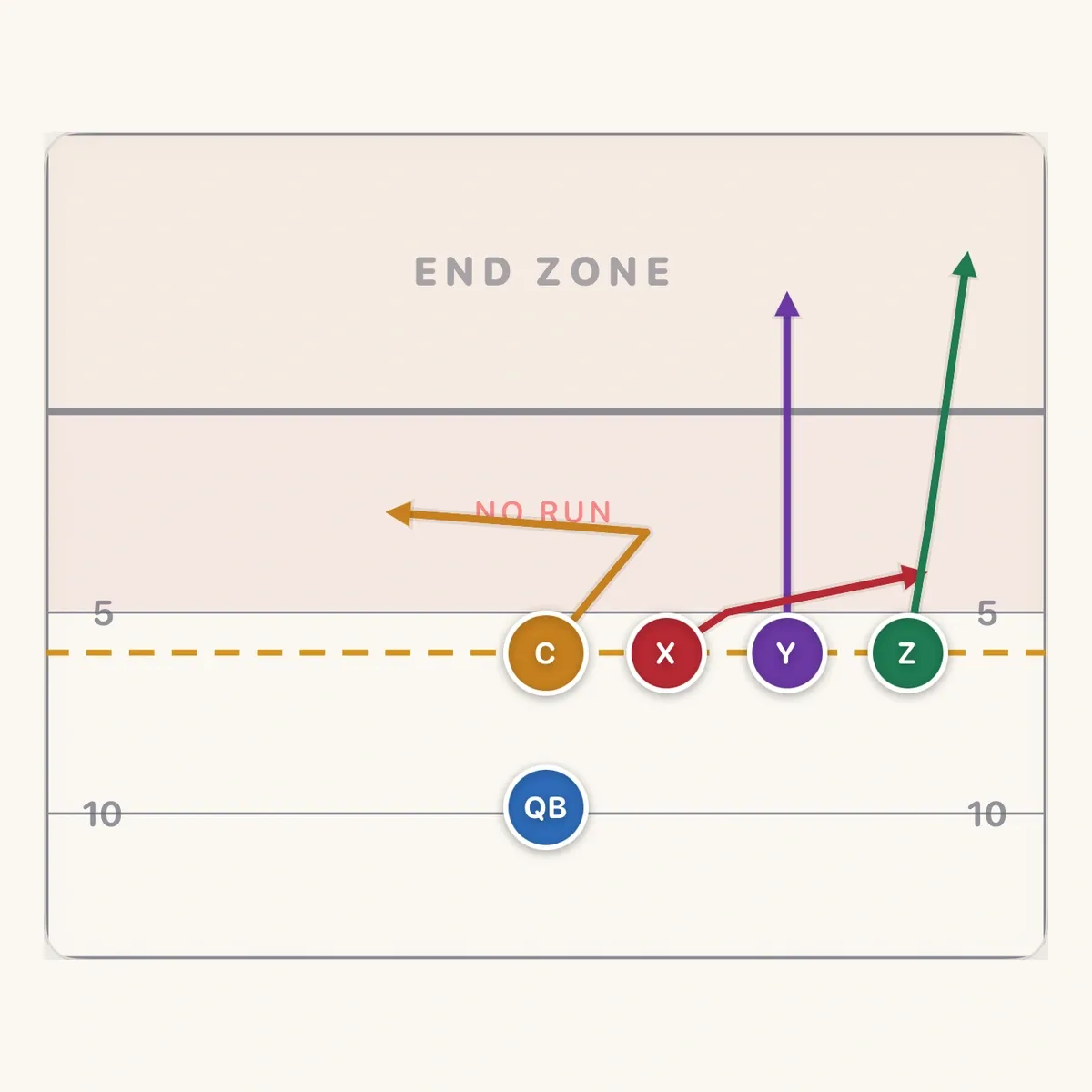
Practise the center and quarterback together first. Have C sell the first movement, turn and show both hands. The quarterback should already know where the pass is going when the turn opens the lane. Add a defender once the timing looks comfortable.
Keep X’s flat moving away on the trips side. X reaches 2 yards downfield, Y runs the seam toward 9 and Z the fade toward 10. Those routes leave room for C’s return. Walk all four receiving paths so the players understand why crowding C makes the throw harder.
Keep the first practice small
Set up your practice with the same player letters on every diagram. Before the snap, ask each player to point to the first route landmark. Then walk one play together. Start with Trips Stick and use the same flat-defender question until your quarterback can answer it without a reminder.
Move to Mesh Drive once the receivers can hold separate depths. Give both crossing receivers catches during the drill. Add Center Pivot after the group can release without bumping into one another. Rotate players through the positions so a new center or receiver knows the route before game day.
Finish with a short series in which you call the play by name, the players line up and the quarterback identifies the first read. Stop if the alignment or route is unclear. Resetting one detail is more useful than running several confused repetitions.
Carry the same calls into the game
Choose the plays your team can run with clear spacing. Pin them in Game Day and keep the same names on your wristband cards. Tell the quarterback which receiver starts the read before the team takes the field.
Keep every call within the field markings and no-run zones. The quarterback stays behind the line to pass. Use the boundary in practice as well as the cones, so receivers learn to finish catches inside the field. Add another play when the team knows the current calls and can explain its own assignments.